Zwerven in Noord Spanje
J
Ancienne Gare de Saint-Saire
Nesle-Hodeng, France4 4 26 Nice spot near former train station
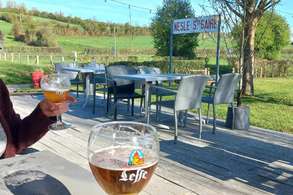
Huilerie Lepine
Availles-en-Châtellerault, France5 4 26 Beautiful spot, found via Camper Contact. I feel a tad uncomfortable because upon arriving at the site I see information about France Passion. Hmmm, concept: a maximum of 24 hours free stay at a farmer's... but you do have to be a member. We don't see anyone at the shop. Feels a bit rude, but we're taking the risk.
Aire de Camping-Car
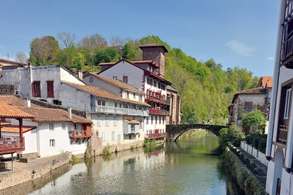
Saint-Jean-Pied-de-Port, FrancePicturesque, the starting point for the Camino for many, with walking and cycling in the surrounding area. And with a bit of luck, watching a game of pelota.
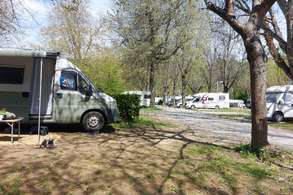
Área Iturrizar
Irurtzun, SpainBeautifully situated campsite. View of the valley and gorge. Along the Via Verde. Maximum 48 hours costs 5 euros, no electricity. Cozy spot with a park/playground.
Waterval Ixkier
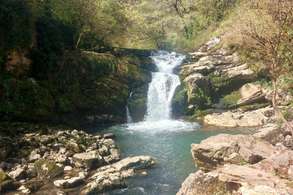
After breakfast and coffee, we leisurely get the bikes ready for a gravel ride along the Vias Verde del Plazaola. Our only goal is exercise and enjoying the surroundings. We succeed perfectly; every now and then we spot a bird of prey, and we hear the splashing of the Larraun at various rapids. We pause at the waterfall and the dilapidated mill of Ixkier. It must be holiday time in Spain, with many mothers and children paddling and clambering over the stones and rocks. After taking some photos, we cycle on and stop for lunch at the former Lekunberri station. They find it rather strange there that we aren't having dessert. We cycle a little further for the views. We turn around and head back. Our camper is the only one at the campsite, and slowly others arrive again. In the small park/playground, locals are walking their dogs, chatting a bit, and the children are playing. It is all very pleasant.
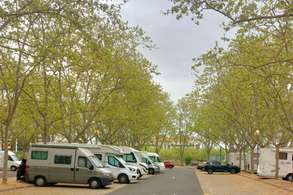
Parking
Logroño, Spain11 4 26 Cp is a large parking lot. Nothing special (see credit card app), walk or take the bus to the center.
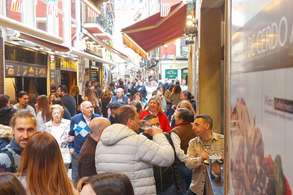
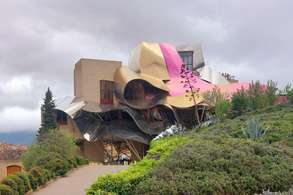
Hotel Marques de Riscal in Elciego
12 4 26 Visit to the Hotel Marqués de Riscal, home to the famous bodega 😉. It is a design by Frank O. Gehry, who is also responsible for the Guggenheim Museum in Bilbao. The building, dating from 2006, stands out due to its spectacular shapes, in the colors of the bodega's wines. An overnight stay starts at around €700.00. We ask at the bodega if we can also have coffee there. That is possible if it isn't too busy... a call is made and it is possible. We wait a moment until a bodega tour has left. Then we are allowed through the staff exit and bodega to the hotel. What a remarkable building. It is lunchtime by now; we order a salad and fish, which are served deliciously slowly, one after the other. Meanwhile, we enjoy an olive, an almond, and the view. Coffee with a sweet chocolate bun to finish.
Haro
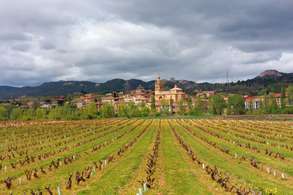
Haro, Spain12 and 13 4 26 Campsite on the edge of the town is basic. We stayed there for 1 night. Afterwards, we moved to the campsite to charge the leisure battery. (Due to little sun, the battery was dead after 4 days)
Fietsen
Good cycling routes nearby
Camperplaats Oña
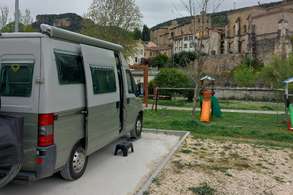
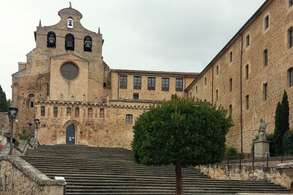
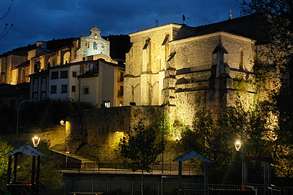
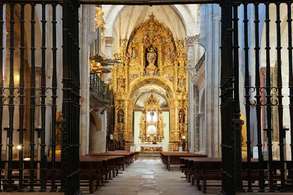
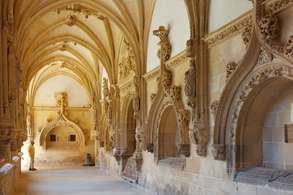
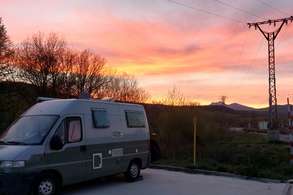
Oña, Spain14 4 26 We move 60 km to a campsite on a Vias Verde in Oña. With this, we leave the vineyards of Rioja and drive through the rolling countryside of Burgos. In the distance, snow-capped mountain peaks. We take the turnoff to Oña and the surroundings become more wooded and with more "gorges". The campsite is located opposite the small town, which is dominated by a Benedictine monastery: Monasterio de San Salvador. An impressive building. After a late lunch and rain that drops to no more than a few drops, we go for a walk. Mostly flat, good ground. The next day we visit the monastery, which is also impressive inside. And cycle on the Via Verde.
Mirador de Alba de los Cardaños
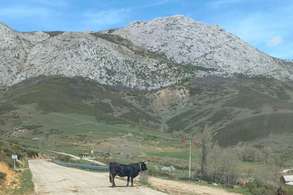
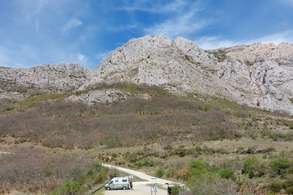
Camping Fuentes Carrionas
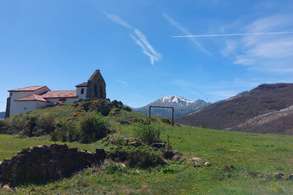
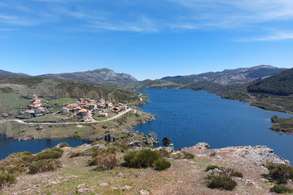
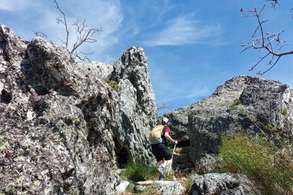
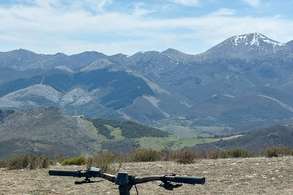
Cervera de Pisuerga, SpainMoving to a campsite 4 km away. Uh, the Google Maps route is an unpaved, increasingly narrow road. Footpath? That's not going to work. Back (in reverse) and via asphalt and signs in the village, we find a better route. We do the laundry etc. and go for a mountain bike ride. Found a nice loop on Komoot, 40 km, 950 meters of elevation gain, highest point at 1650 meters. (The campsite is at 1000 meters.) Along dry levadas. Soon I get to continue on unpaved terrain and head uphill. Naturally, I took a wrong turn a few times. At the dam. After that, a 900-meter stretch described as "you will probably have to walk with your bike." Narrow path, stones, mud, but mostly manageable with the MTB+ setting on the Cube. Then a more relaxed climb over a wide path with beautiful views. See the photo, although in real life it is even much more beautiful, quieter, grander (or something like that). Pure enjoyment! Descending requires good steering and taking it easy. Stay safe. Safe, you can't say that about every house in every hamlet along the way. Also, regular warnings and instructions regarding encounters with bears. Didn't see any. But often small lizards seeking cover and swooping and kiting in the air again. Descending on the P-210 (that beautiful route from yesterday) over smooth asphalt is really nice. I hadn't recognized the color of the MTB route signs before. On the way back to the campsite, we first have a beer on a terrace in the village. Spanish groups are so pleasantly loud.
Barcena de Pie de Concha
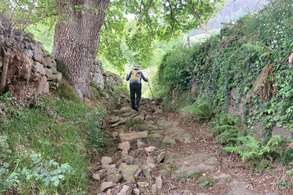
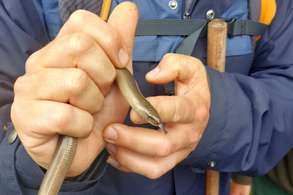
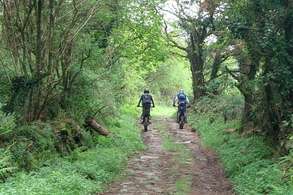
Bárcena de Pie de Concha, SpainBeautiful day. Before reaching the Basque coast, we make another stop in Cantabrica. It is much greener here again. In the region around Cervera de Pisuerga, many moss oaks are not yet in leaf. Here around Barcena, trees like beech and pine are already green. The low walls between the various plots remind us of Ireland. The distance covered today is about 70 km, and we mainly take the back roads. This way, we drive a beautiful route to Barcena. There, we take a walk to an abandoned village: Mediaconcha. The route follows an old Roman path (there they are again, the conquerors of yesteryear). The Calzada Romana del Besaya, one of the best-preserved historical routes in the region. It is cloudy today, and on the climb, it quickly becomes damp and sweaty, but the views are beautiful. When a family of hikers (5 adults and 2 children) walks towards us, I spot a slow worm (20 cm) on the path. I point it out with my walking stick. The man of the group bends down enthusiastically and quickly picks it up. Lively Spanish chatter among them, with translation for us from one of the women. Very nice. One of the children releases the slow worm again and we walk on. After a while, we hear a kind of brushcutter in the distance, but a moment later we are overtaken by two men on trail bikes. We meet up again in the deserted village. They are from the neighborhood and tell us that the village is not entirely deserted. Farmers come up daily to herd their cattle. And we also see a vegetable garden. Jorgè tells us where we can find the ruins of the church. The saying on the wall, "nature is god," seems to have been taken very literally here. Heading back, the descent is pleasant and always faster than going up. We keep hearing cowbells. They turn out to be horses. It is customary here to give the mares in semi-wild herds a bell. This way, the horses stay together in the mountains in the mist and are easier to find. Arriving in the town, we have a beer and a wine on the terrace. The restaurant is full of families/small groups at the end of a late lunch (?). The campsite has everything we need for a night. The view of an abandoned house fits the surroundings. Tomorrow to Santilla del Mar, a drive of about 40 km. Should I go by bike?
Camperpark Santillana del Mar
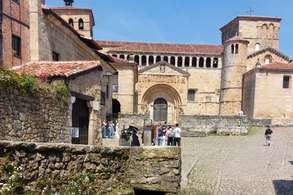
Santillana del Mar, SpainAfter writing down yesterday: "Should I go by bike?", I really started thinking about it, looked for a route, and consulted with Gem to see if she was up for driving the camper to Santillana Del Mar alone. Seems doable. So, let's do it. I drove off the campsite at 11 o'clock, and Gemma emptied the grey water tank etc. and left half an hour later. At half past twelve she texted: "I'm already there, had a good trip, broke out in a sweat occasionally, still miss having extra eyes to take the right turns. But I'm parked." I still had 3 kilometers to go out of the 40. On the way, a chat on the bike with a soon-to-be retiree of 59(!!!). He was practicing his English and I my Spanish. He pointed out a different route to me and the bike app fortunately adjusted it immediately. So we cycled on together for a bit longer. Nice, such a chance encounter. The route largely follows the railway and a river through nice villages, and the last ten kilometers through a park along the river. Mostly downhill, with the occasional short climb. In Santillana Del Mar, I lose my way to the campervan site on the cobblestones of the medieval streets. While searching, I realize that we were here two years ago as well. Back then, it was for a stopover on our way to Oyambre. When I arrive at the site, Gemma is busy with the final touches on the camper. Together, we put it on blocks, take a shower, and then walk into town for lunch. The restaurant Gemma chose has no tables available. Fortunately, there are other restaurants. We enjoy a Spanish lunch on a terrace in a courtyard: local bean soup, asparagus, cod, and chicken. Later, back at the camper, each of us in a corner, in or out of the sun, with our books.
Camping Derby Loredo
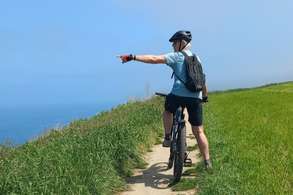
Ribamontán al Mar, SpainYesterday we had made plans for a bike ride to the coast, but today we are doing things differently. We are looking for a spot along the coast and going cycling there. We find a surf campsite above Santander. It all looks a bit messy, partly because they are still busy renovating. But we are more or less on the beach. Fine. The weather is a bit strange. Low clouds/mist from the sea and sunny at the same time. We cycle along the coast in search of lunch. We don't find lunch. Things turn out differently. The bike path is actually a footpath, and on a small descent, Gem gets stuck in the mud and falls in in slow motion. Reason enough to quickly look for asphalt under the wheels again. We succeed, and there is also a very good ice cream cart there. Delicious. Back at the camper, Gemma can shower, rinse out her clothes, and we have tea. Before dinner, we go to the beach to paddle, and watch a surf lesson and people who already know how to surf.
Parking Bakio
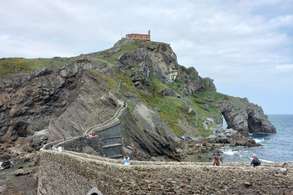
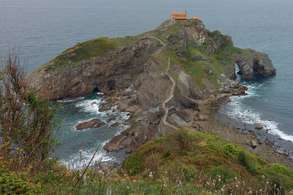
Bakio, SpainSaint Juan de Gaztelugatxe. The small island is connected to the mainland by a narrow bridge between the rocks. At the top of this rock, 150 meters above sea level, there is a small hermitage; to reach it, you have to climb 241 steps over a rocky slope. We can visit the rock without a reservation. During the season, you must reserve a (free) time slot. It has always been a popular destination, but after the stairs and rock were used as a backdrop for Dragonstone in Game of Thrones, it is even busier here. In GOT, Dragonstone is the seat of House Targaryen; in season 7, it is Daenerys's base of operations to claim her right to the Iron Throne. San Juan de Gaztelugatxe has a rich maritime heritage, and the hermitage contains ship models and paintings of ships. (photo taken through a small window) When we get to the top, we sit down and watch what happens when people arrive. Catching our breath, sitting down, looking at and comparing photos taken along the way. Then walking around and getting to work on selfies or model photos. One lady gave a complete performance. First with selfies from all sorts of angles. Then, assisted by her daughter/friend(?), a series on the wall from all sorts of angles and different positions. Very fun to peek at. Others are discussing with each other what should be visible in the background. All very entertaining. Meanwhile, it really is a very beautiful place, so I understand it. As we descend the stairs again, it has become quieter. Few people are coming up anymore. After the stairs, we still have to walk a steep 2.5 km uphill back to the P. Upstairs, we first have a beer in a large bar with a view. We order a salad and fries to go with it. Nothing wrong with that, but otherwise it is a soulless environment, where the staff clears empty tables with a lot of noise and reluctance. For our overnight stay, we booked a campsite in Bakio using the 'Pverde' app. The barrier recognized the registered license plate and granted us access. To cook, we walked to the beach and the bay (a 300-meter walk). Several surfers were showing off their skills.
Zegama
Zegama, SpainWe are parked at a free camper spot (with electricity) at a pilgrim hostel. There are two other campers there. The hostel and campsite are situated above the village, and you can take a lift down to the village. That is quite a unique feature. Furthermore, the view is more than beautiful. And unique.....a lift to the village
Logroño (La Rioja)
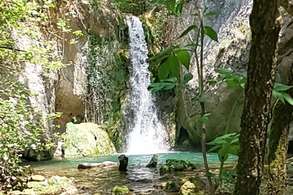
Logroño, SpainWe start with some traffic light fun on the way from Gasteiz to Antoñana. There, we take a 4-hour hike past 2 waterfalls and through beautiful green scenery again. Towards the first waterfall of Sabando, there is little shade and it is quite warm. (We did it again; we started walking just after midday.) At the waterfall, it is nice and cool, and we have a sandwich for lunch. We had expected it to be busier on the way because the parking lot outside the village was completely full. Apparently, people have started doing other things than hiking. Towards the waterfall, we walk in more shade, which is quite pleasant. Along the road, a field full of purple orchids. Beautiful. I also count 6 different species of butterflies today. Which ones... probably the Orange Tip, Adonis Blue, Brimstone, Small Tortoiseshell, and Brown Firefly / you don't remember number 6, for the enthusiast 😉. Furthermore, of course, a few vultures, a black kite, and at the first waterfall a pair of large yellow wagtails (according to AI, they are often seen near fast-flowing streams). The last kilometer to the waterfall is through the forest and we constantly hear the water; only at the very end do we walk alongside it. Some children are playing near a rapids and we walk a little further to the waterfall. Another beautiful one. On the way back to the village, we walk past some rapeseed fields. The village is quiet, empty, and there is not a bar in sight. We drive on for another 40 minutes and are then back at the campsite in Logroño where we also stayed on day 8.
Area de Ayegui
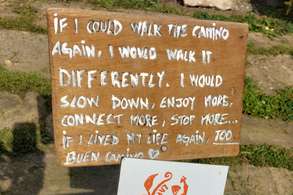
Ayegui, SpainThis morning, we shook up the routines a bit. After breakfast, on time, we immediately started a walk we want to do in Estella before heading towards the French Basque Country/Atlantic coast. A loop of just over an hour to Bodega de Wijnfontein (photo with the beautiful tower). Also a section of the Camino. We walk past a smithy. Wise words invite the walker to take his time for his business. Because walkers naturally don't want to lug heavy things around, you can have purchased iron art shipped. And there are small, portable Camino shells. We buy one. The sunflower (here in wrought form) on your door, for example, is in Spain a means of warding off evil spirits. The sunflower stands for light and strength against the darkness. We walk on and then hear a bird we don't recognize. Merlin does: a common nightingale. After ten minutes, the app 'asks' if I want to continue the recording? In the meantime, the app has heard 7 other birds.😂 Uh... we didn't really notice them consciously. We take the slow road to France and once again enjoy the beautiful winding through and over the mountains. Gemma scores an orange pastry (carrot cake) in honor of the King's birthday as dessert after lunch.